
Blog
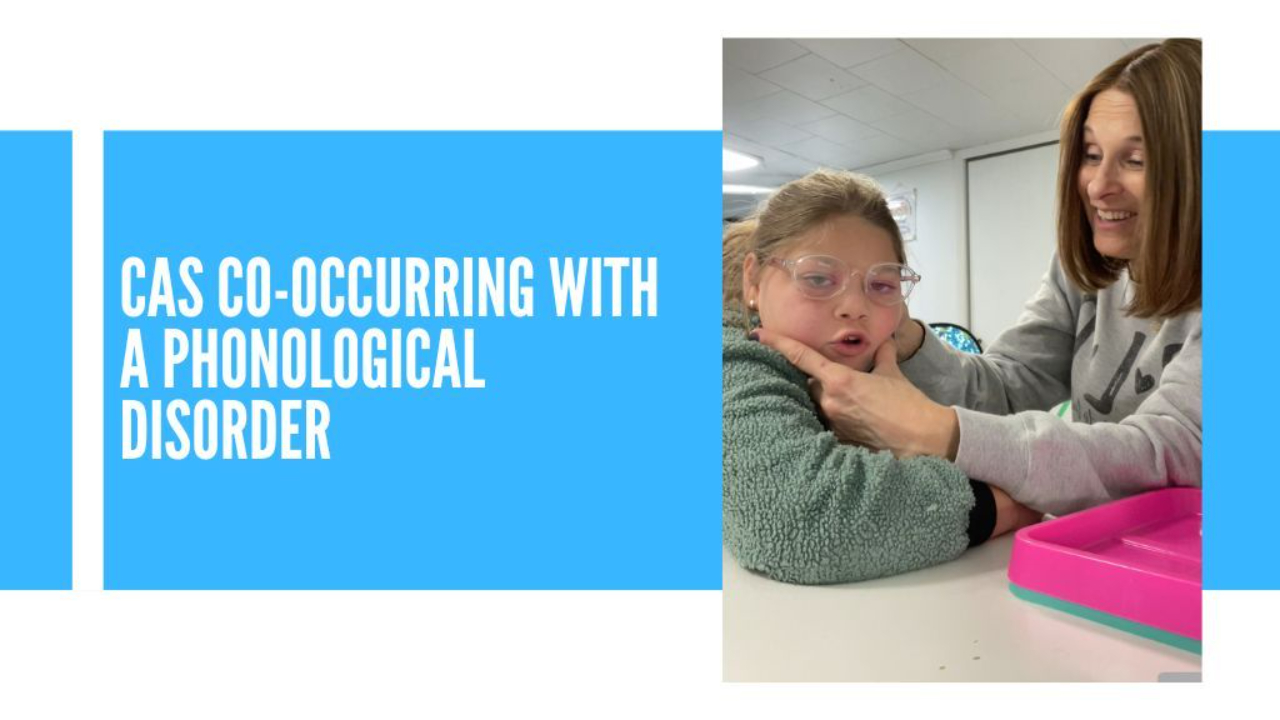
A child can have co-occurring speech sound disorders. A child can have Childhood Apraxia of Speech (CAS) and have some articulation errors or errors in phonological patterns. A child can have CAS and have dysarthria. The assessment process will help determine the role and impact that each disord...

Here is an important statistic!
Sixty-five percent of the children with suspected childhood apraxia of speech (SCAS), have poor reading skills compared to twenty four percent for children with other speech sound disorders and no SCAS. (Miller & Lewis, 2019)
Reading difficulties appear to be a comb...

A common question that I am asked is, how I incorporate AAC in my apraxia therapy sessions?
The approach will differ for each child and will also vary depending on whether you are the only speech therapist working with the child or if your primary goal is to enhance verbal communication through mot...

Principles of Motor Learning (PML) refers to how you structure practice of the target words, in apraxia therapy.
Before we go further, click here to receive a handout with the PML to refer to for session planning.
This blog post will focus on clinical application of the PML. Refer to the handout f...

A frequently asked question in my DM's is, when can I start working on phrases?
In apraxia therapy, we look at building verbal communication skills through improving their speech motor planning skills. Therefore, it may be more advantageous to teach more single words then to work on phrases, as si...

Does a child need make eye contact in apraxia therapy?
- The child should display joint attention skills, which involve participati...

What is multisensory cueing? And why is it so important in apraxia therapy?
Multisensory cueing involves visual, auditory-verbal, and tactile cues. Children with childhood apraxia of speech (CAS) struggle with sequencing speech movements and transitioning between sounds. The use of multisensory cue...

While settling in at my computer, I realized my habit of setting up a few things to aid me during work. From enjoying a cup of tea, a crunchy snack, or a lollipop, to playing music and wearing comfy clothes.
It's common for SLPs to have similar preferences. Hence, it shouldn't come as a su...
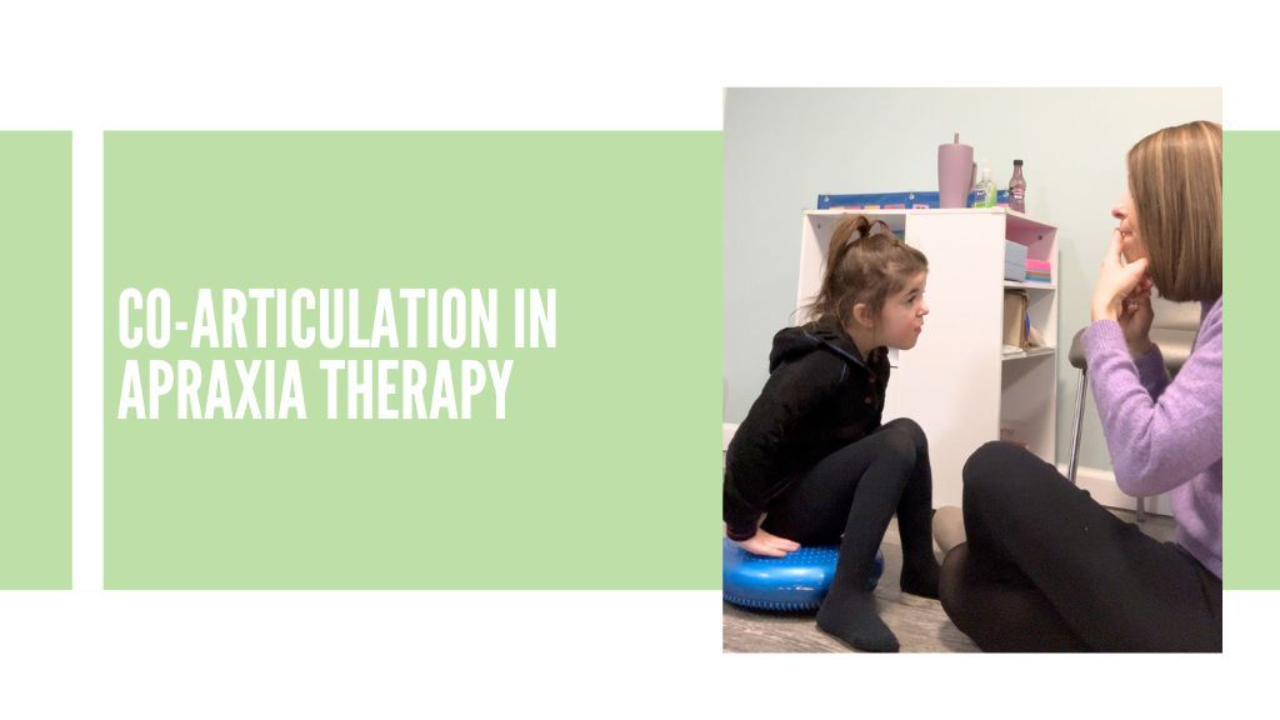
Co-articulation is a useful approach with children speech sound disorders. It is especially helpful for children with CAS as prosody errors are common.
Click here for a great handout!
Co-articulation Explained:
- Co-articulation refers to how a sound is influenced by neighboring sounds.
- Conside...

One of the most important aspects of treatment for childhood apraxia of speech is multi-sensory cueing. That includes auditory / verbal, tactile and visual cues. Todays post will focus on how I use speech sound cue cards as a visual cue to elicit sounds and words in apraxia therapy.
Many follower...

What makes one toy more effective for apraxia speech therapy than another?
Some toys are more limiting and some are more open ended.
👐 Open ended means they can be used in many different ways. Easter eggs are an example of an open ended toy. Any target word that’s a noun, can be hidden inside the ...

Vowel distortions are common in children with apraxia of speech.
Vowel errors significantly affect intelligibility. It is a more discriminative characteristic of childhood apraxia of speech. Apraxia therapy must address vowel errors.
Please note: I will be using the international phonetic alpha...
Free Target Selection for CAS Handout!
Tips to help you choose target words for minimally verbal children.
What is multisensory cueing?
Do's and Don'ts in Apraxia therapy
SIGN UP HERE
